Just a few years ago, building an app took time, money, and a lot of waiting. You needed a team of developers, designers, testers, and project managers – and even then, your app might take months or years to complete. Now, AI and no-code instruments have changed things. If you have a good idea, you can make it real – sometimes even on a weekend. App development for start-ups is now easier, cheaper, and faster. But with many instruments and ways to do things, choosing what’s right for your business can be hard.
In our previous article, we discussed how to choose the right software development company for your startup, exploring how to find a team that could turn your idea into a working product efficiently and reliably. In this article we will see how AI and no-code are changing the start-up world and what it means for your next idea.
The Old Way: Slow, Costly, and Unsure
Before AI and no-code platforms came along, app development for start-ups was like this:
- You had an idea.
- You presented it to investors.
- You hired developers (often at a high cost).
- You spent months building and testing before showing it to users.
By the time you started, you might have used most of your money, only to learn users didn’t want your app.
This way worked for big companies with plenty of money but not for start-ups that wanted to test ideas fast. They needed something easier, quicker, and cheaper. That’s where AI and no-code instruments came in.
The Rise of AI and No-Code Platforms
AI-driven and no-code platforms have opened the door for founders who may not know how to code but know what problem they want to fix.
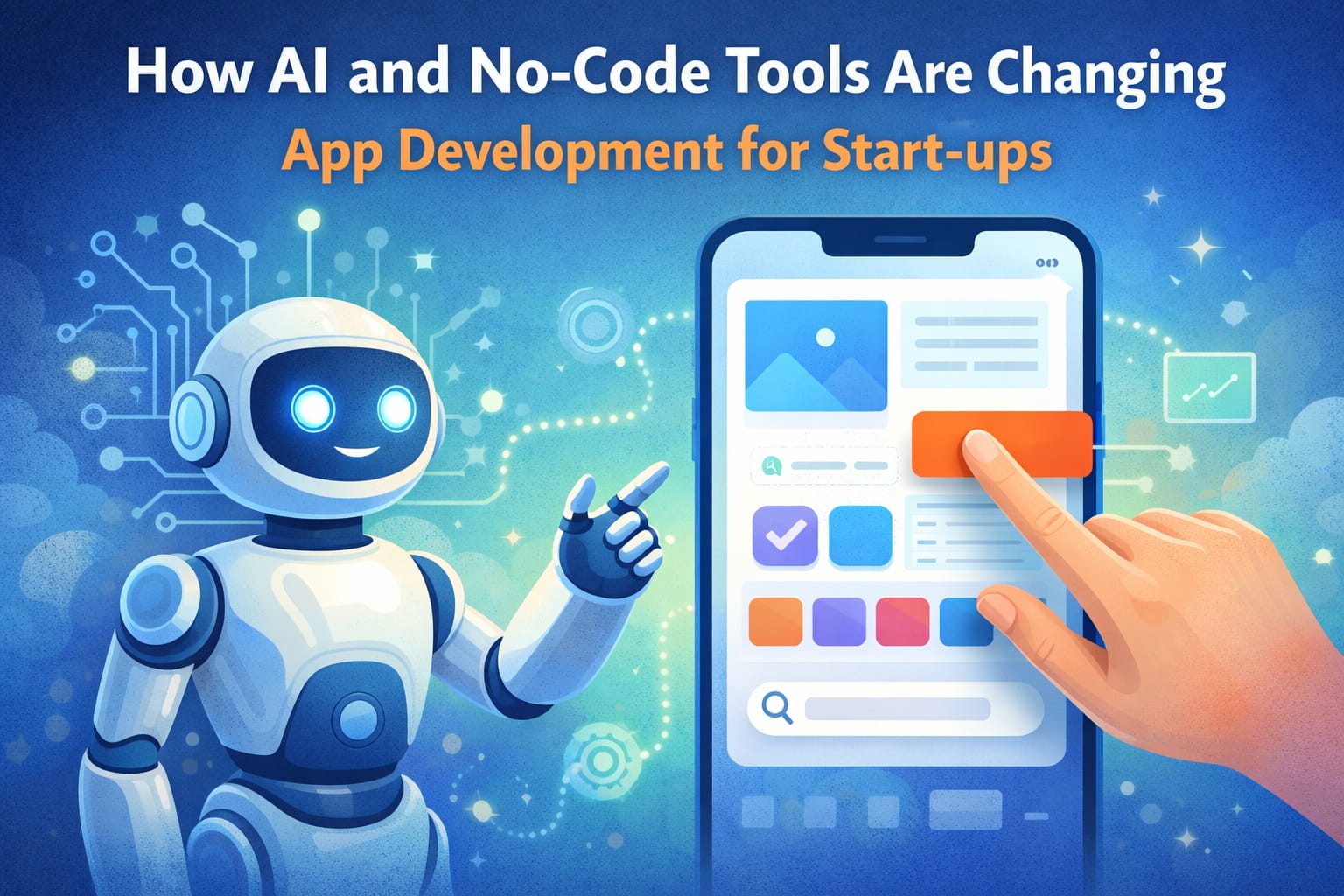
No-code platforms like Bubble, Glide, Adalo, and Webflow allow you to design working apps without coding. AI instruments like Lovable, Replit, and Cursor can make code from a simple request.
If you explain your idea, like an app that helps freelancers manage their clients and payments, AI can make a working model with design, navigation, and sample data in minutes.
This has changed app development for start-ups. It’s now easier to begin. Entrepreneurs can:
- Prototype an idea in hours instead of weeks.
- Launch MVPs for testing without hiring full teams.
- Collect user feedback before spending a lot of money.
Now, founders can start small, get data, and then decide if they want to grow instead of raising thousands to build a first version.
How This Changes App Development for Start-ups
The old way of making products – think, build, start – has been turned around. Now, many start-ups do the opposite: start first, then build. They use no-code or AI instruments to make something that works, let users try it, and learn what’s important before fully building it.
Here’s how this change helps founders:
- Speed Matters
Instead of waiting half a year for a working model, you can have a product to test next week. That speed helps a lot when you want to check your idea quickly.
- Cheap to Start
Hiring a development team can cost a lot. No-code instruments cost much less, and AI instruments often have free options for early work.
- Freedom to experiment
Because it costs less money and time, founders can try many ideas. Some no-code entrepreneurs launch several micro-startups in a year to see what sticks.
- Easier investor conversations
It’s much easier to attract early-stage funding when you have a functional demo or MVP, not just a presentation.
In short, app development for start-ups is now more flexible and open to trying new things, which is good. It helps people learn, adjust, and be creative.
AI and No-Code Aren’t Perfect
These instruments are great, but they have limits. AI can make code but may not know your long-term business plans. No-code instruments are easy to begin with but can be hard to grow.
Some big problems for start-ups are:
- Customization limits: You can only go so far with pre-built templates.
- Scalability issues: As more people use your app, it might not work well on the platform.
- Maintenance and integrations: No-code apps often need manual fixes to work with other systems.
- Ownership concerns: You may not fully control your code or data, depending on the instrument.
That’s why many start-ups eventually take a hybrid approach – starting with AI and no-code to go fast, then changing to custom building when they want to grow.
The Smart Hybrid Approach
For most early-stage founders, the smartest strategy is a mix of both worlds.
You can use no-code or AI instruments to quickly build your first version, get input, and check your idea. Then, once you know what works, you can hire developers to make that version into a strong product that can grow.
This hybrid model helps founders:
- Test ideas fast and cheap.
- Lower risk before spending a lot of money.
- Build a product with a good base for the long run.
And this is where experienced teams like Digital Octane can help.
At Digital Octane, we focus on app development for start-ups, helping founders move from AI models to fully working apps. We know that early founders need to be flexible, not make big promises. So, we mix quick testing with good building.
Whether you’ve already built something in Bubble or are beginning from scratch, we can help you make your idea better, check it with users, and build a version that can grow.
AI Isn’t Just a Tool – It’s a Partner
Another change in app development for start-ups is that now founders are using AI as a creative partner, not just a productivity booster. For example, instead of writing long plans, founders now talk to AI tools to brainstorm ideas, explore user flows, and even generate UI mockups. AI is becoming part of the early design process.
It’s not replacing people’s ideas but making them better.
Imagine describing your app to AI: “I want an app where small businesses can watch their supplies and get alerts when they need to buy more.”
In seconds, AI can draft a list of features, suggest a database structure, and even design a basic interface. You can use that when talking to your developers.
That kind of speed and clarity didn’t exist a few years ago. Now, it’s helping start-ups have a leg up, especially when getting to market fast can decide if an idea succeeds.
When to Be Careful with Only No-Code
Even though no-code is strong, it’s not the answer for everything. Here are some signs that you should get experts involved:
- Performance issues: Your app slows down as more people use it.
- Limited Features: You want to add something the platform doesn’t support.
- Integration headaches: Your CRM, analytics, or billing system doesn’t connect properly.
- Design Limits: You’re stuck with a template that doesn’t fit your brand.
When that happens, it’s often cheaper and smarter to work with a software partner who can rebuild or improve your product for growth rather than pushing no-code instruments too far.
The Future of App Development for Start-ups
If there’s one truth about the future, it’s that start-up innovation moves fast.
AI won’t replace developers, but it will keep changing how apps are planned, built, and started. No-code platforms will get better at handling complex things. The smartest founders will mix these instruments with a strong technical base.
In this new era, app development for start-ups isn’t about choosing whether to do it yourself or hire a team. It’s about knowing what to do and when.
Start light, learn fast, and build smart.
And when it’s time to turn your prototype into something powerful – something built to last – that’s when partnering with a team like Digital Octane can make all the difference.